Blog

  • How to re-seat a CPU without bending pins: Safe 2026 Step-by-Step Expert Guide

    How to re-seat a CPU without bending pins: Safe 2026 Step-by-Step Expert Guide

    H1: How to re-seat a CPU without bending pins and safely restore your PC performance

    If your PC suddenly refuses to boot after maintenance, upgrade, or cleaning, there’s a good chance you’re dealing with a CPU seating issue.

    And look, I’ve seen this situation a thousand times in repair benches—people open their PC, remove the CPU “just to check,” and suddenly end up with bent pins, no display, and a very expensive mistake.

    Here is the real talk about why your rig is acting up: re-seating a CPU is simple in theory, but extremely sensitive in practice. One wrong angle, one bit of pressure, and you can permanently damage the socket.

    So today, let’s break down how to re-seat a CPU without bending pins using proper 2026 hardware standards, safe handling techniques, and real-world engineering logic.


    What Does Re-seating a CPU Mean?

    Re-seating a CPU means removing the processor from the motherboard socket and installing it again correctly.

    This is usually done when:

    • The system is not booting
    • Random crashes occur after upgrade
    • Thermal paste needs reapplication
    • CPU was improperly installed

    Modern CPUs (Intel LGA and AMD AM5 platforms) are extremely delicate, especially pin-based or pad-contact designs.


    Why CPU Pins Bend (Most Common Mistakes)

    Let’s understand the root cause before fixing anything.

    1. Incorrect Alignment

    Forcing CPU into socket without proper alignment is the #1 killer.

    2. Excess Pressure

    CPU should drop in naturally, not be pushed.

    3. Dust or Debris in Socket

    Even tiny particles can misalign contact points.

    4. Tilting During Installation

    Installing at an angle damages pads or pins instantly.

    5. Improper Cooling Pressure

    Over-tightened CPU coolers can warp socket alignment.


    Symptoms of Improper CPU Seating

    If your CPU is not seated correctly, you may see:

    Boot Symptoms

    • No display on startup
    • Motherboard debug LED stuck on CPU
    • Continuous reboot loop
    • Beep codes (CPU failure indication)

    System Symptoms

    • Random shutdowns
    • No BIOS access
    • Fans spinning but no POST

    Advanced 2026 Symptoms

    • AI BIOS recovery loop failure
    • Smart motherboard “hardware mismatch” warning
    • Voltage instability on startup

    Tools You Need for Safe CPU Re-seating

    Before touching anything, prepare properly:

    Essential Tools Checklist

    • Anti-static wrist strap
    • High-quality thermal paste
    • Isopropyl alcohol (90%+)
    • Microfiber cloth
    • Flashlight (for socket inspection)
    • Precision screwdriver set
    • Good lighting environment

    💡 Tech Mentor Tip: I’ve seen people try CPU reseating on carpet floors with no grounding. That’s basically asking for trouble in 2026 hardware standards.


    Intel vs AMD Socket Difference (Important!)

    PlatformPin LocationRisk Level
    Intel LGAPins on motherboardHigh socket risk
    AMD AM5Pins on motherboardVery delicate
    Older AMD PGAPins on CPUHigh CPU risk

    Understanding this is critical because the damage risk changes depending on platform.


    Step-by-Step Guide: How to re-seat a CPU without bending pins

    Now let’s go step-by-step like a professional technician.


    Step 1: Power Off and Discharge System

    • Turn off PC completely
    • Unplug PSU cable
    • Press power button for 10–15 seconds

    This clears residual power from motherboard circuits.


    Step 2: Remove CPU Cooler Carefully

    Unscrew cooler evenly in diagonal pattern.

    Do NOT pull aggressively.

    If stuck:

    • Gently twist to break thermal paste seal

    Step 3: Clean Old Thermal Paste

    Use isopropyl alcohol and microfiber cloth.

    Clean:

    • CPU surface
    • Cooler base

    No residue should remain.


    Step 4: Open CPU Socket Lock

    Lift retention arm gently.

    Never force it—modern sockets are precision-engineered.


    Step 5: Remove CPU Properly

    Hold CPU from edges only.

    Important rules:

    • Never touch contact points
    • Do not slide across socket
    • Lift straight up

    Step 6: Inspect CPU and Socket

    Check for:

    • Bent pins (Intel/AMD boards)
    • Dust particles
    • Burn marks (rare but critical)

    💡 Tech Mentor Tip: I once fixed a “dead CPU” issue that turned out to be a single dust particle blocking contact. Small things matter.


    Step 7: Align CPU Correctly

    Look for:

    • Triangle markers on CPU and socket

    Align carefully before placing.

    CPU should:

    • Sit flat automatically
    • Require zero force

    If you feel pressure → STOP immediately.


    Step 8: Lock CPU Socket

    Close retention arm gently.

    If resistance feels unnatural, reopen and recheck alignment.


    Step 9: Apply Thermal Paste

    Apply small pea-sized amount in center.

    Do not overapply (common beginner mistake).


    Step 10: Reinstall Cooler Evenly

    Tighten screws in diagonal sequence:

    • Top left
    • Bottom right
    • Top right
    • Bottom left

    This ensures even pressure distribution.


    Software vs Hardware Issue Check

    Problem TypeLikely CauseFix Type
    No boot after reseatingMisalignmentHardware fix
    OverheatingBad thermal pasteHardware fix
    BIOS CPU errorSeating issueHardware fix
    Random crashesVoltage instabilityBIOS/Software

    Common Mistakes Beginners Make

    • Forcing CPU into socket
    • Touching pins or pads
    • Using too much thermal paste
    • Uneven cooler tightening
    • Ignoring motherboard socket inspection

    Look, I’ve seen people bend pins just because they were in a hurry. Slow is fast in hardware repair.


    When CPU Pins Are Already Bent

    If damage has already occurred:

    Minor Bend

    • Can sometimes be carefully realigned using precision tools

    Severe Bend

    • Professional repair required
    • Risk of permanent damage

    Never power on system with suspected bent pins.


    BIOS & Voltage Considerations After Re-seating

    After installation:

    • Reset BIOS (recommended)
    • Check CPU voltage stability
    • Ensure correct thermal readings
    • Disable unstable overclock settings

    Modern 2026 motherboards often auto-detect CPU changes, but manual verification is still important.


    Real Tech Mentor Insight

    Here is the truth most guides won’t tell you: CPU reseating is not about strength—it’s about precision and patience.

    Most CPU damage doesn’t happen during failure… it happens during impatience.

    Also, small but real-world note: people often type “motherbord” instead of motherboard when panicking during repair situations—don’t let that be your state of mind during installation 😄


    Final Safety Tips for 2026 Builds

    • Always work in static-safe environment
    • Never rush CPU installation
    • Double-check alignment marks
    • Keep BIOS updated for compatibility
    • Handle socket with extreme care

    Final CTA: Fix it right the first time

    If your system is not booting or you suspect CPU seating issues, don’t guess and don’t force anything.

    Now you know exactly how to re-seat a CPU without bending pins using professional-level techniques used in real hardware labs.

    For more deep repair guides, troubleshooting walkthroughs, and expert PC optimization tips, visit fixrig.xyz—your trusted hub for hardware enthusiasts and DIY fixers.

    Got a tricky CPU or motherboard issue? Drop it in the comments or join the fixrig.xyz community. Someone there has probably already fixed the exact same problem.

    Because in modern PC building, precision is everything—and one small mistake can cost a whole system.

  • Future of DIY Repairs: Can We Fix 2026 Laptops? (Complete Tech Reality Guide)

    Future of DIY Repairs: Can We Fix 2026 Laptops? (Complete Tech Reality Guide)

    Meta Description: Can we fix 2026 laptops at home? Explore DIY repair trends, modular hardware, limitations, tools, and future of laptop repairability.


    Future of DIY Repairs: Can We Fix 2026 Laptops?

    Look, I’ve seen this shift happening for years now—laptops are getting thinner, faster, and more powerful… but also more closed off.

    Here is the real talk about why your repair options are shrinking: modern 2026 laptops are engineered for performance density, not user serviceability.

    So the real question isn’t just can we fix 2026 laptops?
    It’s: how far can DIY repair realistically go before hardware becomes factory-only territory?

    At fixrig.xyz, we’re breaking this down like engineers—not marketing blogs.


    The Reality of 2026 Laptop Design Philosophy

    Modern laptops follow 3 major design goals:

    • Ultra-thin chassis
    • High-performance integration
    • Reduced user-accessible components

    This means:

    More soldered components

    • RAM is often LPDDR (non-upgradable)
    • SSDs may be partially or fully integrated
    • CPUs and GPUs are rarely socket-based

    Higher thermal density

    • Smaller cooling chambers
    • Vapor chamber reliance
    • Aggressive thermal throttling management

    Fewer modular parts

    • USB-C everything
    • Shared power + data controllers
    • Integrated motherboard ecosystems

    So… Can We Still Do DIY Repairs in 2026?

    Yes—but with limitations.

    DIY repair in 2026 is shifting into three categories:

    1. External-level repairs (Easy)

    • Battery replacement (select models)
    • SSD replacement (some laptops)
    • Keyboard replacement (modular designs)

    2. Component-level repairs (Medium)

    • Fan replacement
    • Thermal paste replacement
    • Display cable replacement

    3. Board-level repairs (Advanced)

    • Solder rework
    • MOSFET replacement
    • IC-level diagnostics

    This is where most users stop—and professionals begin.


    Common Symptoms That Still Allow DIY Repair

    Even modern laptops show predictable failure signs:

    1. Random Shutdowns

    Often linked to thermal throttling or VRM instability.

    2. Battery Drain Issues

    Degraded lithium cells or power controller faults.

    3. Overheating Under Load

    Dust blockage or dried thermal compound.

    4. Performance Drops

    Driver issues, BIOS misconfiguration, or power limits.


    Tools Needed for Modern Laptop Repair (2026 Kit)

    If you’re serious about DIY repair, your toolkit must evolve:

    Basic Tools

    • Precision screwdriver set
    • Plastic pry tools
    • Anti-static wrist strap

    Intermediate Tools

    • Thermal paste (high conductivity)
    • USB bootable diagnostic drive
    • Multimeter for voltage testing

    Advanced Tools

    • Soldering station
    • Hot air rework station
    • Thermal camera (for diagnostics)

    Comparison Table: DIY Repair vs Professional Repair (2026)

    FactorDIY RepairProfessional Repair
    CostLowHigh
    RiskMedium to HighLow
    Skill requiredModerate to AdvancedExpert technicians
    Warranty impactOften voids warrantyPreserved (authorized centers)
    Hardware accessLimitedFull board-level access

    Step-by-Step: Can You Fix a 2026 Laptop at Home?

    Step 1: Identify the Real Problem

    Don’t guess.

    Look, I’ve seen people replace SSDs when the real issue was just a thermal shutdown.

    Use:

    • BIOS diagnostics
    • Hardware monitoring tools
    • Boot behavior analysis

    Step 2: Check Software vs Hardware Fault

    Before opening anything:

    • Update BIOS
    • Update drivers
    • Check system logs

    If the issue persists → move to hardware diagnosis.


    Step 3: External Component Inspection

    Start simple:

    • Battery health check
    • Charger voltage test
    • Port inspection (USB-C wear is common)

    Step 4: Internal Cleaning and Thermal Service

    Most common fix in 2026 laptops:

    • Open bottom panel
    • Clean fans
    • Replace thermal paste
    • Inspect airflow channels

    This alone solves 40–60% of overheating issues.


    Step 5: Modular Component Replacement

    If your laptop supports it:

    • Swap SSD
    • Replace RAM (if not soldered)
    • Replace cooling fans

    This is still the “true DIY zone.”


    Step 6: Advanced Diagnostics (Board-Level Only)

    If issues persist:

    • Check motherboard voltage rails
    • Inspect MOSFET circuits
    • Identify short circuits

    At this stage, most users should stop and consult professionals.


    Root Causes Behind Modern Laptop Failures

    1. Thermal Design Limits

    Thin laptops = restricted airflow = faster degradation.

    2. Battery Chemistry Aging

    Lithium-ion cells degrade faster in high-performance systems.

    3. BIOS Power Management Bugs

    Improper firmware updates can cause instability.

    4. Voltage Instability

    Power delivery issues from compact VRM designs.

    5. Dust Accumulation in Micro Chambers

    Even small dust buildup causes major heat spikes.


    Future Trends in DIY Laptop Repair

    1. Modular Laptop Movement

    Companies slowly reintroducing upgradeable components.

    2. AI-Based Diagnostics

    Built-in system health prediction tools.

    3. Tool-Free Access Designs

    Magnetic panels and snap-in components.

    4. Cloud-Based Repair Guides

    OEM-integrated repair assistance systems.


    Real Engineering Insight (Important Truth)

    Here is the reality most people don’t hear:

    Modern laptops are not “unrepairable”—they are repair-tier segmented.

    Meaning:

    • Basic users → external fixes only
    • Advanced users → internal modular repairs
    • Engineers → board-level diagnostics

    So DIY repair is not dying…
    It’s just becoming skill-tier dependent.


    Final Thoughts

    The future of DIY repair is not about whether we can fix 2026 laptops.

    It’s about:

    • What level of repair you’re trained for
    • What tools you have access to
    • How modular your device actually is

    At fixrig.xyz, we see a clear direction:
    repair is becoming more technical, not impossible.


    CTA: Join the Hardware Future with fixrig.xyz

    If your laptop is showing symptoms and you’re not sure whether it’s DIY-fixable or board-level damage, drop your model and issue details in the comments.

    I’ll break it down like a field engineer—no guesswork, no fluff.

    Because in 2026 hardware engineering… repairability is still alive—it just evolved.

  • Best Air Pressure Settings for Cleaning PC Dust Without Damage (2026 Complete Guide)

    Best Air Pressure Settings for Cleaning PC Dust Without Damage (2026 Complete Guide)

    Look, I’ve seen this mistake a thousand times—people grab a powerful air compressor and blast their PC like it’s a car engine bay.

    And then they wonder why their GPU fan starts rattling or their motherboard behaves weird.

    Here is the real talk about why your rig is acting up in these cases: cleaning pressure matters just as much as cleaning technique. Too much air pressure can damage bearings, spin fans dangerously fast, or even stress delicate SMD components on the motherboard.

    So in this fixrig.xyz engineer-level guide, we’ll break down the Best air pressure settings for cleaning PC dust without damage, based on real hardware safety standards used in 2026.


    Why Air Pressure Matters in PC Cleaning

    A PC is not just metal and plastic—it’s a precision electronic system containing:

    • GPU fans with delicate bearings
    • Motherboard SMD circuits
    • RAM contacts
    • PSU internal airflow channels
    • NVMe and SATA components

    Too much pressure = mechanical stress + static risk.


    Common Symptoms of Improper PC Air Cleaning

    1. Fan Bearing Noise After Cleaning

    Over-spinning damages lubrication.

    2. Random System Instability

    Loose dust moved into sensitive areas.

    3. GPU Fan Vibration

    Blade imbalance due to forced rotation.

    4. System Not Booting Properly

    Dust dislodged into RAM or PCIe slots.


    Safe Air Pressure Basics (Critical Concept)

    Ideal Air Pressure Range for PC Cleaning

    2030PSI20\text{–}30\,\text{PSI}20–30PSI

    This is the safe engineering range for most PC components.

    Above this range:

    • Fan damage risk increases
    • Component stress increases
    • Dust may be pushed deeper instead of removed

    Comparison Table: Air Pressure Levels

    Pressure LevelUsageRisk LevelRecommendation
    10–20 PSILight dust removalVery SafeBest for laptops
    20–30 PSIStandard PC cleaningSafeIdeal range
    30–50 PSIHeavy dust removalModerate riskUse carefully
    50+ PSIIndustrial compressorsHigh riskNot recommended

    Tools Checklist for Safe PC Dust Cleaning

    Before starting, gather:

    • Compressed air can OR adjustable air blower
    • Anti-static brush
    • Microfiber cloth
    • ESD-safe gloves (optional but recommended)
    • Screwdriver set
    • Stable workspace

    Pro tip: Never use random shop compressors without pressure control.


    Step-by-Step Guide: Safe PC Dust Cleaning (Engineer Method)

    Step 1: Shut Down and Disconnect Power

    Unplug everything.

    • Power cable
    • GPU cables
    • External devices

    Residual voltage can still be present in PSU.


    Step 2: Open the Case Carefully

    Remove side panel and expose internal components.

    Check:

    • GPU dust buildup
    • CPU cooler blockage
    • Case fan accumulation

    Step 3: Set Air Pressure Correctly

    Look, I’ve seen this error a thousand times—people skip pressure control.

    Set:

    • 20–30 PSI for desktop PCs
    • Lower for laptops (10–20 PSI)

    If using canned air:

    • Keep short bursts only
    • Never continuous spray

    Step 4: Hold Fans in Place

    This is critical.

    If you let fans spin freely:

    • You damage bearings
    • You create voltage backfeed risk in rare cases

    Hold fan blades gently using a plastic tool.


    Step 5: Clean in Short Controlled Bursts

    Do NOT:

    • Blast continuously
    • Aim too close
    • Focus too long on one area

    Do:

    • Short 1–2 second bursts
    • Move systematically across components

    Step 6: Focus on Heat Zones

    Main dust traps:

    • GPU heatsink
    • CPU cooler fins
    • PSU intake grill
    • Front case filters

    Step 7: Clean Motherboard Safely

    Use:

    • Low pressure air
    • Anti-static brush for stubborn dust

    Avoid direct high-pressure contact with:

    • Capacitors
    • VRM zones
    • RAM slots

    Step 8: Reassemble and Test

    After cleaning:

    • Reconnect components
    • Power on system
    • Check fan noise and temps

    Advanced Pro Tips (2026 Hardware Standard)

    1. Use Pulsed Air Technique

    Instead of continuous airflow, use bursts to prevent static buildup.


    2. Maintain Distance

    Keep nozzle at:

    1015cm10\text{–}15\,\text{cm}10–15cm

    Too close = concentrated pressure damage.


    3. Clean With Gravity Direction

    Always blow dust OUT of the case—not deeper inside.


    4. Avoid Vacuum Cleaners Inside PC

    Static electricity risk is real.


    5. Use Positive Airflow Strategy

    Clean from:

    • Top → Bottom
    • Front → Back

    Common Mistakes Users Make

    Using Industrial Air Compressors

    Too powerful and unstable airflow.

    Not Holding Fans

    This is the #1 cause of post-cleaning noise.

    Cleaning Without Disassembly

    Dust stays trapped inside heatsinks.

    Spraying Too Close

    Can damage delicate motherboard traces.


    Real Engineering Insight

    Here’s something most guides won’t tell you:

    PC dust cleaning is not just about removing dirt—it’s about airflow restoration and thermal efficiency recovery.

    Improper air pressure doesn’t just clean poorly—it can actually:

    • Increase thermal throttling
    • Reduce GPU lifespan
    • Cause fan imbalance

    When Deep Cleaning Is Required

    You may need full teardown if:

    • Dust is inside heatsink layers
    • Temperatures remain high after cleaning
    • Fan noise persists
    • Airflow is blocked internally

    At that stage, surface cleaning is not enough.


    Final Thoughts: Precision Over Power

    The safest Best air pressure settings for cleaning PC dust without damage is not about maximum force—it’s about controlled airflow engineering.

    Stick to:

    • 20–30 PSI for desktops
    • Short bursts only
    • Proper fan control
    • Anti-static awareness

    And your system will stay cooler, quieter, and longer-lasting.


    CTA: Keep Your Rig Clean the Smart Way

    At fixrig.xyz, we don’t just clean PCs—we engineer airflow stability.

    Still unsure about safe cleaning pressure or worried about damaging your hardware?

    Drop your setup details in the comments, and I’ll guide you like a real hardware engineer.

    Because in modern PC maintenance… cleaning without control is just controlled damage.

  • Troubleshooting External Hard Drive Not Showing Up in Disk Management (2026 Expert Fix Guide)

    Troubleshooting External Hard Drive Not Showing Up in Disk Management (2026 Expert Fix Guide)

    Look, I’ve seen this issue a thousand times—and it always starts with the same panic moment.

    You plug in your external hard drive… nothing shows up in File Explorer… then you open Disk Management and—still nothing.

    Here is the real talk about why your rig is acting up: this is not always data loss. In most cases, it’s a hardware detection failure between USB controller, drivers, power delivery, or disk initialization at OS level.

    In this fixrig.xyz expert guide, I’ll walk you through troubleshooting external hard drive not showing up in Disk Management, step by step, like a real hardware engineer—not a generic tech blog.


    Common Symptoms of External Drive Not Showing Up

    Before fixing, identify the exact behavior:

    1. Drive Not Visible in File Explorer

    Windows does not assign a drive letter.

    2. Missing in Disk Management

    Even advanced tools can’t detect it.

    3. USB Sound But No Drive

    Connection is partially working.

    4. Device Appears in Device Manager Only

    Hardware is detected but not initialized.

    5. Random Disconnects

    Drive appears and disappears repeatedly.


    Root Causes (Hardware + System-Level Breakdown)

    Faulty USB Port or Cable

    Weak or damaged connection prevents stable detection.

    Insufficient Power Supply

    External drives need proper voltage delivery.

    Missing or Corrupted Drivers

    System cannot communicate with storage device.

    Uninitialized or RAW Disk State

    Drive exists but has no partition table.

    BIOS or UEFI USB Configuration Issues

    Some systems disable external storage detection.

    Physical Drive Failure

    Mechanical or SSD failure inside enclosure.


    Tools Checklist Before Troubleshooting

    Prepare these tools:

    • Alternate USB cable
    • Different USB ports (rear preferred)
    • External power adapter (if required)
    • Another PC for testing
    • Disk Management access
    • Device Manager access

    Pro tip: Always isolate hardware vs software before assuming data loss.


    Comparison Table: Software Issue vs Hardware Issue

    Cause TypeSymptomsFix DifficultyRecovery Chance
    Software (Drivers/Partition)Drive partially detectedEasyHigh
    USB Cable/Port IssueIntermittent detectionEasyHigh
    Power FailureDrive spins off/onMediumMedium
    Firmware/Controller IssueNot visible anywhereHardMedium
    Physical FailureNo detection at allVery HardLow

    Step-by-Step: Troubleshooting External Hard Drive Not Showing in Disk Management

    Step 1: Check Physical Connection

    Start simple:

    • Unplug and replug drive
    • Try different USB port
    • Avoid front panel ports

    Look, I’ve seen this error a thousand times—it’s often just a bad cable.


    Step 2: Try Another System

    Connect drive to another PC:

    • If it works → your system issue
    • If not → drive issue

    This isolates the fault immediately.


    Step 3: Check Device Manager

    Press:

    • Win + X → Device Manager

    Look under:

    • Disk Drives
    • USB Controllers

    If unknown device appears → driver issue.


    Step 4: Scan Disk Management Properly

    Open:

    • Disk Management

    Check for:

    • Unallocated disk
    • Offline disk
    • No drive letter

    If visible but unallocated → data may still be safe.


    Step 5: Assign Drive Letter Manually

    If disk exists but not shown:

    • Right-click → Change Drive Letter
    • Assign new letter

    This fixes many “invisible drive” cases.


    Step 6: Reinstall USB Drivers

    Go to Device Manager:

    • Uninstall USB controllers
    • Restart PC

    Windows will reinstall drivers automatically.

    Drivers play a critical role in detection stability.


    Step 7: Check Power Delivery

    Some external drives require:

    • Dual USB power
    • External adapter

    Low voltage = drive spin failure.

    Voltage instability is a hidden cause most users ignore.


    Step 8: Initialize Disk (ONLY if empty or new)

    If disk shows as:

    • Unknown
    • Not initialized

    You can initialize it—but WARNING:

    • This erases existing partition data structure

    Only do this if data is not important.


    Step 9: Disable USB Power Saving

    Windows may cut power:

    • Control Panel → Power Options
    • Disable USB selective suspend

    This prevents random disconnects.


    Step 10: BIOS/UEFI USB Check

    Enter BIOS:

    • Ensure USB storage support enabled
    • Enable legacy USB if required

    Some systems restrict external device detection at firmware level.


    Advanced Troubleshooting (Pro Level)

    Check Disk in Diskpart

    Use Command Prompt:

    • diskpart
    • list disk

    If visible here → software-level issue.

    If NOT visible → hardware-level problem.


    Test Enclosure vs Drive Separately

    Sometimes:

    • SATA drive is fine
    • USB enclosure is dead

    Try removing drive from enclosure.


    Check SMART Status (If Detected)

    If drive appears:

    • Run SMART diagnostics

    Warning signs:

    • Reallocated sectors
    • Read errors

    Common Mistakes That Make It Worse

    Formatting Immediately

    This destroys recoverable data structure.

    Ignoring Power Issues

    Many external drives fail due to low voltage.

    Using Cheap USB Hubs

    Unstable power = detection failure.

    Reconnecting Repeatedly

    Can worsen mechanical wear.


    Real-World Scenarios

    Problem: Drive spins but not visible

    Cause: Partition or driver issue
    Fix: Disk Management repair


    Problem: No response at all

    Cause: Power or hardware failure
    Fix: Try different cable or enclosure


    Problem: Visible on other PC

    Cause: System configuration issue
    Fix: Driver reset or USB fix


    Pro Tips from a Hardware Engineer

    • Always use rear motherboard USB ports
    • Avoid cheap cables for external HDDs
    • Backup data regularly (3-2-1 rule)
    • Monitor drive health with SMART tools

    And here’s something most guides won’t tell you:
    External drive issues are often NOT disk failures—they are USB controller or power instability problems disguised as disk failure.


    When to Consider Hardware Failure

    Assume failure if:

    • Drive not detected on multiple systems
    • No spin-up sound
    • Repeated clicking or vibration issues
    • Enclosure replacement doesn’t help

    At that stage, professional recovery may be needed.


    Final Thoughts: Diagnose Before You Panic

    Troubleshooting external hard drive not showing up in Disk Management is all about layered diagnosis:

    Hardware → Cable → Power → Drivers → Disk Management → BIOS

    Skip steps, and you’ll miss the real cause.

    Follow the process, and most “dead drives” come back to life—or at least reveal their true condition.


    CTA: Fix Your Storage Like a Pro

    At fixrig.xyz, we don’t guess—we diagnose hardware problems properly.

    Still can’t see your external drive in Disk Management? Not sure if it’s dead or just hidden?

    Drop your setup details in the comments—and we’ll help you troubleshoot it step by step.

    Because in real hardware engineering… nothing is ever “random”—it’s always a signal waiting to be understood.

  • How to Fix Coil Whine in High-End Graphics Cards (2026 Hardware Engineer Guide)

    How to Fix Coil Whine in High-End Graphics Cards (2026 Hardware Engineer Guide)

    Look, I’ve seen this issue a thousand times—and it always confuses users the same way.

    You buy a high-end GPU, install it, run a game… and suddenly you hear a high-pitched electrical buzzing sound.

    That’s coil whine.

    Here is the real talk about why your rig is acting up: coil whine is not a “fault” in most cases—it’s a physics side-effect of electrical components vibrating under high load frequency changes, especially in modern high-performance GPUs.

    In this fixrig.xyz expert breakdown, I’ll show you how to fix coil whine in high-end graphics cards, or at least reduce it to near silence using real hardware-level techniques.


    What Is Coil Whine? (Hardware Explanation)

    Coil whine happens when electrical components vibrate at high frequency under load.

    Main Sources Inside GPU:

    • Power delivery coils (VRMs)
    • Inductors on PCB
    • Capacitor oscillation under load spikes

    When GPU load changes rapidly, current flow fluctuates, causing vibration → sound.


    Common Symptoms of Coil Whine

    1. High-Pitched Noise During Gaming

    Especially in high-FPS scenes.

    2. Noise Changes with FPS

    More FPS = more whine.

    3. Silent Desktop, Loud Under Load

    Idle is fine, gaming triggers sound.

    4. PSU or GPU Area Buzzing

    Sound comes from GPU zone or PSU region.


    Root Causes (2026 GPU Power Behavior)

    High Frame Rates (Uncapped FPS)

    Modern GPUs push 300–1000 FPS in menus → unstable power draw.

    Voltage Spikes

    Rapid voltage switching in VRMs.

    PSU Ripple Noise

    Low-quality power supply amplifies coil vibrations.

    Poor Electrical Dampening

    Budget GPUs or aging components lack insulation.

    Extreme Overclocking

    Increases current fluctuations.


    Tools Checklist for Diagnosis

    Before attempting fixes:

    • FPS limiter software
    • GPU monitoring tool
    • PSU with stable output rating
    • Alternative power cable
    • Benchmark software

    Pro tip: Always test coil whine under controlled FPS conditions.


    Comparison Table: Software Fix vs Hardware Fix

    Fix TypeDifficultyCostEffectiveness
    FPS LimitingEasyFreeHigh
    V-Sync / G-SyncEasyFreeHigh
    Undervolting GPUMediumFreeVery High
    PSU UpgradeMedium$$High
    GPU ReplacementHard$$$Absolute

    Step-by-Step: How to Fix Coil Whine in High-End Graphics Cards

    Step 1: Limit FPS Immediately

    This is the most effective first step.

    • Enable V-Sync
    • Or set FPS cap (60/120/144)

    Why it works:
    Less FPS = less power fluctuation = reduced coil vibration.


    Step 2: Enable G-Sync or FreeSync

    If supported:

    • Smooth frame delivery
    • Reduced sudden power spikes

    This stabilizes GPU load behavior.


    Step 3: Try Undervolting GPU

    Undervolting reduces electrical stress:

    • Lower voltage
    • Same performance in many cases
    • Reduced coil vibration

    Use tools like MSI Afterburner.


    Step 4: Check PSU Quality

    Look, I’ve seen this error a thousand times—people blame GPU, but PSU is often the real culprit.

    Check:

    • Wattage rating
    • 80+ certification
    • Stable rails (12V line)

    A weak PSU = unstable voltage = louder coil whine.


    Step 5: Change Power Cable or PCIe Connector

    Sometimes issue is simple:

    • Replace PCIe cables
    • Avoid daisy-chaining

    Poor contact increases electrical noise.


    Step 6: Try Different Power Outlet

    Yes, even wall power matters:

    • Avoid overloaded extension boards
    • Use direct socket

    Voltage instability contributes to noise.


    Step 7: Adjust In-Game Settings

    High FPS menus are the worst offenders:

    • Cap menu FPS
    • Reduce unnecessary rendering load

    Many games run 500+ FPS in menus → coil whine spikes.


    Step 8: Apply GPU Power Limit

    In GPU software:

    • Reduce power limit by 10–20%

    This stabilizes voltage swings.


    Step 9: Test Case Airflow & Mounting

    Improper mounting can amplify noise:

    • Tighten GPU screws
    • Ensure no vibration contact with case

    Sometimes sound is amplified physically.


    Step 10: BIOS/UEFI Power Settings

    Some motherboards support:

    • PCIe power management
    • Power phase tuning

    Adjusting this can reduce noise.


    Advanced Troubleshooting (Pro Level Fixes)

    PSU Swap Testing

    If possible:

    • Test GPU with another PSU

    This isolates root cause quickly.


    Frame Rate Behavior Analysis

    If coil whine:

    • Increases with FPS → GPU normal behavior
    • Constant noise → PSU or hardware issue

    Cap Background FPS

    Modern GPUs render hidden frames:

    • Steam menus
    • Browsers
    • Launchers

    Cap global FPS for stability.


    Common Mistakes That Make Coil Whine Worse

    Running Unlimited FPS

    This is the biggest cause.

    Using Low-Quality PSU

    Cheap units amplify noise.

    Overclocking Without Testing

    Increases voltage instability.

    Ignoring PSU-GPU Pairing

    Mismatch causes electrical imbalance.


    Real-World Scenarios

    Problem: Coil whine in menus only

    Cause: Uncapped FPS
    Fix: FPS limiter or V-Sync


    Problem: Constant buzzing under load

    Cause: PSU instability
    Fix: PSU upgrade or replacement


    Problem: New GPU has coil whine

    Cause: Normal manufacturing variance
    Fix: Undervolt or limit FPS


    Pro Tips from a Hardware Engineer

    • Coil whine is NOT always a defect
    • High FPS = high electrical switching noise
    • Undervolting often gives best balance
    • PSU quality matters more than users think

    And here’s something most guides won’t tell you:
    Even two identical GPUs can behave differently due to microscopic differences in coil winding and PCB manufacturing tolerances.


    When to Consider RMA or Replacement

    Only consider replacement if:

    • Coil whine is extreme even at low FPS
    • Noise persists across multiple PSUs
    • It affects usability

    Otherwise, it’s usually manageable.


    Final Thoughts: Physics, Not Failure

    Fixing coil whine in high-end graphics cards is not about “eliminating” it completely—it’s about controlling electrical load behavior.

    You’re not fixing a broken GPU…
    You’re managing how power flows through it.


    CTA: Optimize Your GPU Like a Pro

    At fixrig.xyz, we go beyond basic fixes—we teach real hardware engineering thinking.

    Still dealing with coil whine? Not sure if it’s your GPU or PSU?

    Drop your full system specs in the comments—and let’s tune your setup step-by-step.

    Because in high-end hardware… silence is not luck, it’s engineering.

  • Troubleshooting “System Thread Exception Not Handled” BSOD (Complete 2026 Fix Guide)

    Troubleshooting “System Thread Exception Not Handled” BSOD (Complete 2026 Fix Guide)

    Look, I’ve seen this BSOD a thousand times—and it almost always hits users at the worst possible moment.

    You’re working, gaming, or just booting your PC… and suddenly the system crashes with a blue screen:

    “SYSTEM_THREAD_EXCEPTION_NOT_HANDLED”

    Here is the real talk about why your rig is acting up: this error is almost always caused by faulty drivers, corrupted system files, GPU instability, or low-level hardware conflicts inside Windows kernel operations.

    In this fixrig.xyz expert guide, I’ll walk you through Troubleshooting “System Thread Exception Not Handled” BSOD step-by-step like a real hardware engineer—not generic Windows advice.


    Common Symptoms of This BSOD Error

    Before fixing it, confirm what you’re seeing:

    1. Sudden Blue Screen on Startup

    System crashes before login screen.

    2. Looping Restart Cycle

    PC keeps restarting repeatedly.

    3. Error Points to a File (e.g., nvlddmkm.sys)

    Indicates driver-level failure.

    4. Random Crashes During Gaming or Load

    Usually GPU or RAM instability.

    5. Safe Mode Works, Normal Mode Doesn’t

    Strong indicator of driver issue.


    Root Causes (Deep Hardware + Software Breakdown)

    Corrupt or Faulty GPU Drivers

    Most common cause in modern systems.

    Incompatible Windows Update

    Driver mismatch after update.

    RAM Instability or XMP Issues

    Overclocked memory causing kernel faults.

    Faulty System Files

    Windows kernel corruption.

    Overheating or Thermal Throttling

    Unstable hardware behavior under load.

    BIOS Misconfiguration

    Incorrect memory or CPU settings.


    Tools Checklist Before Troubleshooting

    Prepare these tools:

    • Windows Safe Mode access
    • Driver update/uninstaller tool (DDU recommended)
    • USB recovery drive
    • BIOS access
    • RAM testing tool (Windows Memory Diagnostic / MemTest)

    Pro tip: Always isolate software vs hardware before making changes.


    Comparison Table: Software Fix vs Hardware Fix

    Fix TypeDifficultyCostEffectiveness
    Driver RepairEasyFreeVery High
    System RestoreEasyFreeHigh
    BIOS ResetMediumFreeHigh
    RAM TestingMediumFreeMedium-High
    Hardware ReplacementHard$$Permanent Fix

    Step-by-Step Fix for “System Thread Exception Not Handled”

    Step 1: Boot into Safe Mode

    If system crashes:

    • Force shutdown 3 times
    • Enter Recovery Mode
    • Select Safe Mode

    Safe Mode disables problematic drivers.


    Step 2: Identify Faulty Driver File

    If BSOD shows file like:

    • nvlddmkm.sys (GPU driver)
    • ntfs.sys (storage)

    This gives direct clue.


    Step 3: Clean Reinstall GPU Drivers

    Look, I’ve seen this error a thousand times—GPU drivers are usually the real culprit.

    Use:

    • Display Driver Uninstaller (DDU)
    • Reinstall latest stable driver

    Avoid beta drivers unless necessary.


    Step 4: Run System File Checker

    Open CMD (Admin):

    • sfc /scannow
    • DISM /Online /Cleanup-Image /RestoreHealth

    This repairs corrupted Windows files.


    Step 5: Check RAM Stability

    Faulty RAM = kernel crash.

    Test using:

    • Windows Memory Diagnostic
    • MemTest86

    If errors appear → RAM issue confirmed.


    Step 6: Reset BIOS Settings

    Enter BIOS:

    • Load default settings
    • Disable unstable XMP profiles temporarily

    Incorrect RAM timing can trigger BSOD.


    Step 7: Check Temperature & Voltage

    Overheating causes instability:

    • Monitor CPU/GPU temps
    • Check voltage fluctuations

    Thermal throttling can indirectly cause system crashes.


    Step 8: Uninstall Recent Windows Updates

    If issue started recently:

    • Roll back latest update
    • Or use System Restore point

    Some updates break driver compatibility.


    Step 9: Update Chipset & Motherboard Drivers

    Many users ignore this step:

    • Install latest chipset drivers
    • Update motherboard firmware

    This improves system stability.


    Advanced Troubleshooting (Pro Level Fixes)

    GPU Underclocking Test

    If crash happens under load:

    • Reduce GPU clock speed
    • Test stability

    RAM XMP Disable Test

    XMP profiles can be unstable:

    • Disable XMP
    • Run system at default speed

    Check Storage Health

    Corrupt system files may come from failing SSD/HDD:

    • Run SMART test
    • Check disk errors

    BIOS Update (Careful)

    If motherboard firmware is outdated:

    • Update BIOS safely
    • Avoid power interruption

    This fixes deep compatibility issues.


    Common Mistakes That Make It Worse

    Reinstalling Windows Immediately

    Often unnecessary and time-consuming.

    Ignoring Driver Conflicts

    Most BSODs are driver-related.

    Keeping Overclock Enabled

    Unstable OC = random kernel crashes.

    Installing Random Drivers from Websites

    Always use official sources.


    Real-World Scenarios

    Problem: BSOD after GPU driver update

    Cause: Driver corruption
    Fix: Clean reinstall using DDU


    Problem: BSOD during gaming

    Cause: GPU instability or heat
    Fix: Lower clocks + check temps


    Problem: BSOD after RAM upgrade

    Cause: XMP mismatch
    Fix: Disable XMP or retune RAM


    Pro Tips from a Hardware Engineer

    • Always use stable GPU drivers, not latest experimental ones
    • Keep BIOS settings simple unless you understand tuning
    • Monitor RAM stability after upgrades
    • Maintain clean driver environment

    And here’s something most guides won’t tell you:
    This BSOD is rarely random—it’s almost always a driver-hardware communication failure inside Windows kernel execution threads.


    When to Consider Hardware Failure

    You may have hardware issues if:

    • BSOD persists after clean reinstall
    • RAM tests fail
    • GPU crashes across multiple systems
    • System corrupts repeatedly

    At that stage, replacement or deep diagnostics is needed.


    Final Thoughts: Stability is Engineering, Not Luck

    Troubleshooting “System Thread Exception Not Handled” BSOD is about systematic isolation:

    Drivers → RAM → BIOS → GPU → Storage → OS

    Skip steps, and you miss the real problem.

    Follow the process, and most systems recover completely.


    CTA: Fix Your System Like a Pro

    At fixrig.xyz, we don’t guess—we diagnose hardware at engineering level.

    Still stuck on BSOD errors? Not sure if it’s RAM, GPU, or drivers?

    Drop your full system details in the comments—and let’s debug it step-by-step.

    Because in real hardware troubleshooting… every crash is just a clue waiting to be decoded.

  • Troubleshooting “Display Driver Stopped Responding” During Gaming (2026 Complete Fix Guide)

    Troubleshooting “Display Driver Stopped Responding” During Gaming (2026 Complete Fix Guide)

    Look, I’ve seen this error a thousand times—and it always shows up right in the middle of intense gameplay.

    Your screen freezes… goes black… then recovers with a message like:

    “Display driver stopped responding and has recovered.”

    Here is the real talk about why your rig is acting up: this is almost never a single issue. It’s usually a GPU driver timeout caused by instability in graphics processing, voltage spikes, overheating, or memory pressure under gaming load.

    In this fixrig.xyz expert guide, I’ll break down Troubleshooting “Display Driver Stopped Responding” during gaming step-by-step like a real hardware engineer—not generic Windows advice.


    Common Symptoms of Display Driver Crash

    1. Screen Freeze During Gaming

    Game pauses suddenly for a few seconds.

    2. Black Screen Recovery

    Display goes black, then returns.

    3. Error Notification Popup

    Windows reports driver recovery.

    4. Game Crashes to Desktop

    Especially in high-GPU-load scenes.

    5. Stuttering Before Crash

    Performance drops before failure.


    Root Causes (GPU + System-Level Analysis)

    Outdated or Corrupted GPU Drivers

    Most common trigger in modern systems.

    GPU Overheating (Thermal Throttling)

    High temperatures cause driver reset.

    Power Supply Instability (Voltage Drops)

    Unstable PSU leads to GPU timeout.

    Overclocking Instability

    Too high GPU/VRAM clocks.

    Memory Pressure in Games

    VRAM exhaustion causes reset.

    Windows TDR (Timeout Detection Recovery)

    GPU not responding within system timeout window.


    Tools Checklist Before Troubleshooting

    Prepare:

    • GPU monitoring tool (MSI Afterburner)
    • Driver cleanup tool (DDU)
    • Temperature monitoring software
    • PSU wattage checker
    • Stable internet for driver download

    Pro tip: Always isolate software vs hardware instability first.


    Comparison Table: Software Fix vs Hardware Fix

    Fix TypeDifficultyCostEffectiveness
    Driver ReinstallEasyFreeVery High
    GPU Settings ResetEasyFreeHigh
    Cooling ImprovementMediumLowHigh
    PSU UpgradeMedium$$Very High
    GPU ReplacementHard$$$Permanent Fix

    Step-by-Step Fix for “Display Driver Stopped Responding” During Gaming

    Step 1: Clean Reinstall GPU Drivers

    Look, I’ve seen this error a thousand times—drivers are the main culprit.

    Steps:

    • Boot into Safe Mode
    • Use DDU (Display Driver Uninstaller)
    • Remove all GPU drivers completely
    • Install latest stable driver

    Avoid beta drivers unless required.


    Step 2: Monitor GPU Temperature

    Check during gameplay:

    • Idle: 35–50°C
    • Gaming: 65–85°C

    If above 85°C → thermal throttling likely.

    Fix:

    • Clean dust
    • Improve airflow
    • Reapply thermal paste if needed

    Step 3: Disable GPU Overclocking

    Overclock instability is a silent killer.

    • Reset GPU to default clocks
    • Disable factory OC temporarily

    Test stability again.


    Step 4: Adjust Power Settings

    Windows and GPU settings:

    • Set Power Mode to “High Performance”
    • Disable aggressive power saving

    This stabilizes GPU response timing.


    Step 5: Increase TDR Timeout (Advanced Fix)

    Windows may reset GPU too quickly.

    Registry tweak:

    • TdrDelay = 10–15 seconds

    This prevents premature driver reset.


    Step 6: Check PSU Stability

    Here is the real deal—many users ignore this.

    Weak PSU = unstable GPU behavior.

    Check:

    • Wattage capacity
    • 80+ certification
    • Rail stability (12V line)

    Voltage drops = driver crash loop.


    Step 7: Lower In-Game Graphics Load

    Reduce stress:

    • Lower texture quality
    • Disable ray tracing
    • Cap FPS (important)

    Uncapped FPS = unstable GPU spikes.


    Step 8: Test VRAM Usage

    If VRAM is full:

    • Reduce resolution
    • Close background apps

    Memory overflow can trigger driver reset.


    Advanced Troubleshooting (Pro Level Fixes)

    BIOS Update for GPU Stability

    Some motherboards improve PCIe compatibility via BIOS updates.


    PCIe Slot Change

    Move GPU to another slot if available:

    • Fixes lane instability
    • Improves signal integrity

    Undervolting GPU

    Undervolting can stabilize:

    • Power spikes
    • Temperature
    • Driver response timing

    Often better than overclocking.


    Check Background GPU Load

    Apps like:

    • Browsers
    • Streaming software
    • Recording tools

    Can overload GPU unexpectedly.


    Common Mistakes That Make It Worse

    Installing Random GPU Drivers

    Always use official NVIDIA/AMD sources.

    Ignoring PSU Quality

    Cheap PSU = unstable GPU behavior.

    Overclocking Without Testing

    Even small OC can break stability.

    Running Max Settings on Weak Hardware

    Not all rigs are built for ultra settings.


    Real-World Scenarios

    Problem: Crash only in AAA games

    Cause: GPU load spike
    Fix: FPS cap + driver clean install


    Problem: Crash after driver update

    Cause: corrupted install
    Fix: rollback or DDU reinstall


    Problem: Random desktop recovery errors

    Cause: PSU or overheating
    Fix: check thermals + voltage


    Pro Tips from a Hardware Engineer

    • Always prefer stable drivers over newest ones
    • Keep GPU temps below 80°C for long-term stability
    • FPS cap is underrated stability tool
    • PSU quality matters more than most users realize

    And here’s something most guides won’t tell you:
    This error is not just a “driver problem”—it’s a GPU response timeout triggered by unstable hardware conditions under real-time rendering pressure.


    When to Consider Hardware Replacement

    Replace or upgrade if:

    • Crashes persist after clean driver install
    • GPU overheats despite cooling fixes
    • PSU cannot handle load spikes
    • VRAM is consistently maxed out

    At that point, software fixes won’t help.


    Final Thoughts: Stability is Engineering, Not Luck

    Troubleshooting “Display Driver Stopped Responding” during gaming is all about system stability tuning:

    Drivers → Thermals → Power → Memory → Load → BIOS

    Fix the weakest link, and your system stabilizes.


    CTA: Fix Your GPU Like a Pro

    At fixrig.xyz, we don’t guess—we diagnose hardware at engineering level.

    Still getting display driver crashes during gaming? Not sure if it’s GPU, PSU, or thermals?

    Drop your full system specs in the comments—and let’s tune your rig step-by-step.

    Because in real gaming performance… stability wins over power every single time.

  • Best Remote Hardware Troubleshooting Tools for IT Support in 2026 (Complete Engineer Guide)

    Best Remote Hardware Troubleshooting Tools for IT Support in 2026 (Complete Engineer Guide)

    If you’re doing IT support in 2026, one thing is clear—remote troubleshooting is no longer optional, it’s the standard.

    Look, I’ve seen this shift happen across companies: laptops, workstations, and even high-end gaming rigs are now diagnosed without ever touching the device physically.

    Here is the real talk about why your IT workflow matters now more than ever: modern systems are complex mixes of BIOS-level firmware, cloud-connected drivers, GPU acceleration layers, and power-managed hardware states.

    So in this fixrig.xyz expert guide, we’ll break down the Best remote hardware troubleshooting tools for IT support in 2026, and how professionals actually use them in real-world environments.


    Why Remote Hardware Troubleshooting Matters in 2026

    Modern systems are:

    • Hybrid cloud-connected devices
    • Driver-dependent ecosystems
    • BIOS + firmware integrated platforms
    • Power-managed intelligent hardware

    This means IT support is no longer just “restart your PC” level work.

    Now you diagnose:

    • GPU instability
    • RAM timing issues
    • BIOS misconfigurations
    • Thermal throttling
    • Driver conflicts

    All remotely.


    Common Symptoms IT Teams Diagnose Remotely

    1. System Random Freezing

    Often GPU or RAM instability.

    2. High CPU/GPU Usage with No Load

    Background driver or malware issue.

    3. Boot Failures or BIOS Loop

    Firmware corruption or hardware mismatch.

    4. Peripheral Not Responding

    USB controller or driver-level failure.

    5. Thermal Shutdowns

    Overheating detected via sensors.


    Core Categories of Remote Hardware Troubleshooting Tools

    To understand the ecosystem, break tools into categories:

    1. Remote Access Tools

    Used to control systems directly.

    2. Hardware Diagnostic Tools

    Check system health, sensors, and components.

    3. Network-Level Monitoring Tools

    Ensure connectivity and packet stability.

    4. BIOS & Firmware Tools

    Low-level system configuration access.

    5. Performance Monitoring Tools

    Track voltage, temperature, and load.


    Comparison Table: Popular Remote IT Support Tools

    Tool TypeExample ToolsUse CaseEfficiency
    Remote AccessAnyDesk, TeamViewerFull system controlVery High
    DiagnosticsHWMonitor, AIDA64Hardware health checkHigh
    Network ToolsWireshark, PingPlotterNetwork debuggingHigh
    BIOS ToolsVendor utilitiesFirmware updatesMedium
    MonitoringMSI AfterburnerGPU/CPU trackingVery High

    Best Remote Hardware Troubleshooting Tools for IT Support in 2026

    Now let’s go deep into actual tools used by professionals.


    1. AnyDesk (Fast Remote Hardware Access)

    AnyDesk is still a top-tier solution in 2026.

    Why IT engineers use it:

    • Low latency control
    • Lightweight architecture
    • Cross-platform support

    Best for:

    • Driver fixes
    • System configuration
    • Software-level diagnostics

    2. TeamViewer (Enterprise Remote Support)

    Still widely used in corporate environments.

    Strengths:

    • Secure encrypted sessions
    • File transfer support
    • Multi-device control

    IT use case:

    • Remote BIOS troubleshooting support
    • Enterprise workstation repair

    3. AIDA64 (Hardware Diagnostic King)

    Look, this is where real hardware engineers live.

    What it does:

    • CPU stress testing
    • GPU monitoring
    • RAM latency tracking
    • Temperature sensors

    Why it matters:

    It reveals hidden instability in hardware before crashes happen.


    4. HWMonitor (Thermal + Voltage Tracking)

    This tool is essential for modern troubleshooting.

    Tracks:

    • CPU temperature
    • GPU temperature
    • Voltage fluctuations
    • Fan speed

    If voltage is unstable, systems behave unpredictably.


    5. MSI Afterburner (GPU-Level Control Tool)

    Not just for gamers—it’s an IT diagnostic weapon.

    Features:

    • GPU clock monitoring
    • VRAM usage tracking
    • Fan curve adjustment

    Pro tip:

    Thermal throttling issues are often solved here first.


    6. Wireshark (Network-Level Debugging Tool)

    Used when systems appear “slow” remotely.

    Detects:

    • Packet loss
    • Network delays
    • DNS issues

    Because sometimes the “hardware issue” is actually network lag.


    7. Vendor BIOS Utilities (Low-Level Fix Tools)

    Motherboard manufacturers provide firmware tools:

    • ASUS Armoury Crate
    • MSI Dragon Center
    • Gigabyte Control Center

    Use cases:

    • BIOS updates
    • Fan curve control
    • Hardware compatibility fixes

    Step-by-Step Remote Troubleshooting Workflow

    Step 1: Establish Remote Session

    Use AnyDesk or TeamViewer to access system.


    Step 2: Check System Performance

    Open:

    • Task Manager
    • Resource Monitor

    Look for abnormal CPU or RAM usage.


    Step 3: Run Hardware Diagnostics

    Launch AIDA64 or similar tool:

    • Check CPU temps
    • Stress test GPU
    • Monitor RAM stability

    Step 4: Inspect Drivers

    Look, I’ve seen this error a thousand times—drivers are often the root cause.

    • Update GPU drivers
    • Reinstall chipset drivers
    • Remove corrupted drivers

    Step 5: Check BIOS Configuration

    Remote BIOS checks:

    • Boot priority
    • XMP status
    • CPU voltage settings

    Incorrect BIOS settings = unstable system.


    Step 6: Monitor Thermals and Voltage

    Use HWMonitor:

    • If voltage drops → PSU issue
    • If temps high → cooling issue

    Step 7: Network Verification (If System Feels Slow)

    Use Wireshark or ping tests:

    • Packet loss detection
    • Latency spikes

    Advanced IT Support Techniques (Pro Level)

    Remote Safe Mode Boot

    Used to isolate driver issues.


    Registry-Level Fixes

    Used for persistent OS corruption.


    BIOS Firmware Flashing (Carefully)

    Fixes deep compatibility issues.


    Virtual Hardware Simulation Testing

    Used in enterprise environments for prediction.


    Common Mistakes IT Technicians Make

    Ignoring Thermal Data

    Temperature tells the real story.

    Updating Everything at Once

    Breaks system stability.

    Not Checking Power Supply Health

    Voltage instability causes random crashes.

    Assuming Software Issue Only

    Hardware is often the real culprit.


    Real-World IT Scenario Examples

    Case 1: Remote PC keeps freezing

    Cause: GPU overheating
    Fix: fan curve + thermal paste


    Case 2: System slow but internet fine

    Cause: background driver failure
    Fix: clean reinstall drivers


    Case 3: Random reboot during workload

    Cause: PSU voltage instability
    Fix: hardware replacement


    Pro Tips from Hardware Engineers

    • Always monitor voltage, not just temperature
    • Use multiple tools, not just one
    • Remote diagnosis requires pattern recognition
    • BIOS misconfiguration causes 30%+ of “ghost issues”

    And here’s the real engineering truth:
    Remote troubleshooting is not about tools—it’s about interpreting hardware behavior through software signals.


    Final Thoughts: The Future of IT Support

    In 2026, IT support is evolving into:

    • AI-assisted diagnostics
    • Remote firmware control
    • Predictive hardware failure detection

    And professionals using the best remote hardware troubleshooting tools for IT support in 2026 are already ahead of the curve.


    CTA: Join the fixrig.xyz Hardware Engineering Community

    At fixrig.xyz, we break down real hardware problems like engineers—not guesswork tutorials.

    Got a stubborn PC issue or remote system failure?

    Drop your case in the comments and get real diagnostic guidance.

    Because in modern IT support… the right tool doesn’t just fix problems—it predicts them before they happen.

  • How to Update BIOS Safely Without a UPS (2026 Complete Risk-Control Guide)

    How to Update BIOS Safely Without a UPS (2026 Complete Risk-Control Guide)

    Look, I’ve seen this situation go wrong more times than I can count—someone tries a BIOS update, power flickers for one second, and suddenly the motherboard is a very expensive paperweight.

    Here is the real talk about why your rig is acting up when BIOS updates fail: BIOS flashing is one of the most sensitive operations in modern hardware because it directly modifies firmware at the motherboard level.

    And doing it without a UPS (Uninterruptible Power Supply) increases the risk of interruption—so the goal is not “zero risk” (that doesn’t exist), but controlled risk management.

    In this fixrig.xyz expert guide, we’ll break down How to update BIOS safely without a UPS using real engineering practices used by technicians in 2026.


    Why BIOS Updates Are High-Risk Operations

    BIOS is the foundation firmware of your system. It controls:

    • CPU initialization
    • RAM training
    • Storage detection
    • Power sequencing
    • PCIe device handshake

    If something interrupts this process, the system may fail to boot.


    Common Risks When Updating BIOS Without UPS

    1. Sudden Power Loss

    The biggest danger—can corrupt firmware mid-write.

    2. System Freeze During Flashing

    Often caused by unstable drivers or background processes.

    3. Incorrect BIOS File

    Wrong version = incompatibility or boot failure.

    4. Overheating During Update

    Rare, but possible on poorly cooled systems.

    5. Motherboard Recovery Failure

    Older boards may not support dual BIOS recovery.


    Safe Conditions Before Updating BIOS (Critical Checklist)

    Before you even think about flashing BIOS, ensure:

    • Stable power outlet (no loose wiring)
    • Fully charged laptop battery (if laptop)
    • No background heavy processes
    • Correct BIOS version downloaded
    • USB drive properly formatted (FAT32)

    Comparison Table: BIOS Update With vs Without UPS

    ScenarioRisk LevelStabilityRecommendation
    With UPSVery LowHighIdeal method
    Without UPSModerateDepends on environmentAcceptable with precautions
    Low-quality power supplyHighUnstableNot recommended

    Tools Checklist for Safe BIOS Update Without UPS

    You will need:

    • Stable USB flash drive (FAT32 formatted)
    • Official motherboard BIOS file
    • BIOS flash utility (EZ Flash / Q-Flash)
    • Laptop charger or stable PSU
    • Optional: multimeter (advanced users)

    Step-by-Step Guide: How to Update BIOS Safely Without a UPS

    Step 1: Verify Motherboard Model

    Look, I’ve seen this error a thousand times—people download wrong BIOS versions.

    Check:

    • Exact motherboard model
    • Revision number
    • Manufacturer website

    Never guess BIOS files.


    Step 2: Download Official BIOS Only

    Go to:

    • ASUS / MSI / Gigabyte official site

    Avoid:

    • Third-party BIOS files
    • Modified firmware

    One wrong file = dead board.


    Step 3: Prepare USB Drive Properly

    Format USB as:

    • FAT32
    • Clean partition
    • Single BIOS file only

    Rename file if required by manufacturer.


    Step 4: Ensure Stable Power Environment

    Since you are not using a UPS, do this:

    • Avoid peak electricity hours
    • Do not plug into loose sockets
    • Disconnect unnecessary devices

    If on laptop:

    • Plug in charger
    • Ensure battery is above 70%

    Step 5: Enter BIOS Flash Utility

    Most boards use:

    • ASUS EZ Flash
    • MSI M-Flash
    • Gigabyte Q-Flash

    Navigate carefully—do not change unrelated settings.


    Step 6: Start BIOS Update Process

    Now comes the critical moment.

    • Select BIOS file from USB
    • Confirm update
    • Do NOT touch system

    This process may take 2–10 minutes.


    Step 7: Do Not Interrupt Under Any Condition

    This is where most failures happen.

    Rules:

    • Do NOT restart
    • Do NOT press keys
    • Do NOT power off system

    Even small interruptions can corrupt firmware.


    Step 8: Wait for Automatic Reboot

    System will restart itself after update.

    First boot may take longer than usual—this is normal.


    Advanced Safety Techniques (Pro-Level Engineering Tips)

    1. Disable Overclocking Before BIOS Update

    Overclock instability can cause flashing errors.


    2. Close All Background Applications

    Reduces system interference.


    3. Use BIOS Flashback Feature (If Available)

    Some modern boards allow flashing without booting OS.


    4. Avoid Storm or Voltage-Unstable Conditions

    Even without UPS, environmental stability matters.


    5. Keep BIOS File on Root of USB

    Avoid folder path confusion during selection.


    What Happens If Power Fails Mid-Update?

    Here’s the engineering reality:

    • BIOS chip may become corrupted
    • System may fail POST
    • Recovery mode may be required
    • In worst case: motherboard replacement

    Some modern boards have:

    • Dual BIOS recovery
    • USB BIOS Flashback recovery

    But not all systems are protected.


    Recovery Options If BIOS Update Fails

    1. CMOS Reset

    • Remove battery
    • Clear CMOS jumper

    2. BIOS Flashback Recovery

    • Use dedicated recovery USB port

    3. Manufacturer Recovery Mode

    Some boards auto-enter recovery BIOS.


    Common Mistakes Users Make

    Using Wrong BIOS Version

    Even slightly wrong version can break compatibility.

    Updating During Unstable Power Conditions

    Biggest risk without UPS.

    Interrupting Update Process

    Never touch system during flashing.

    Ignoring Motherboard Instructions

    Each board has specific update rules.


    Real Engineering Insight

    BIOS update is not just a “software upgrade”—it is a firmware-level rewrite of your system’s hardware control logic.

    That’s why:

    • Stability matters more than speed
    • Environment matters more than convenience
    • Precision matters more than assumptions

    Final Thoughts: Risk Control is the Real Skill

    Learning How to update BIOS safely without a UPS is not about avoiding risk completely—it’s about minimizing failure probability through preparation and discipline.

    If you follow correct steps:

    • Stable environment
    • Correct BIOS file
    • No interruptions
    • Proper USB preparation

    Then even without UPS, success rate remains high.


    CTA: Upgrade Your System Safely with fixrig.xyz

    At fixrig.xyz, we don’t just explain BIOS updates—we engineer safe hardware workflows.

    Still unsure about your BIOS version or worried about flashing risk?

    Drop your motherboard model in the comments, and I’ll guide you step-by-step like a real hardware engineer.

    Because in firmware engineering… the smallest mistake can become the biggest failure.

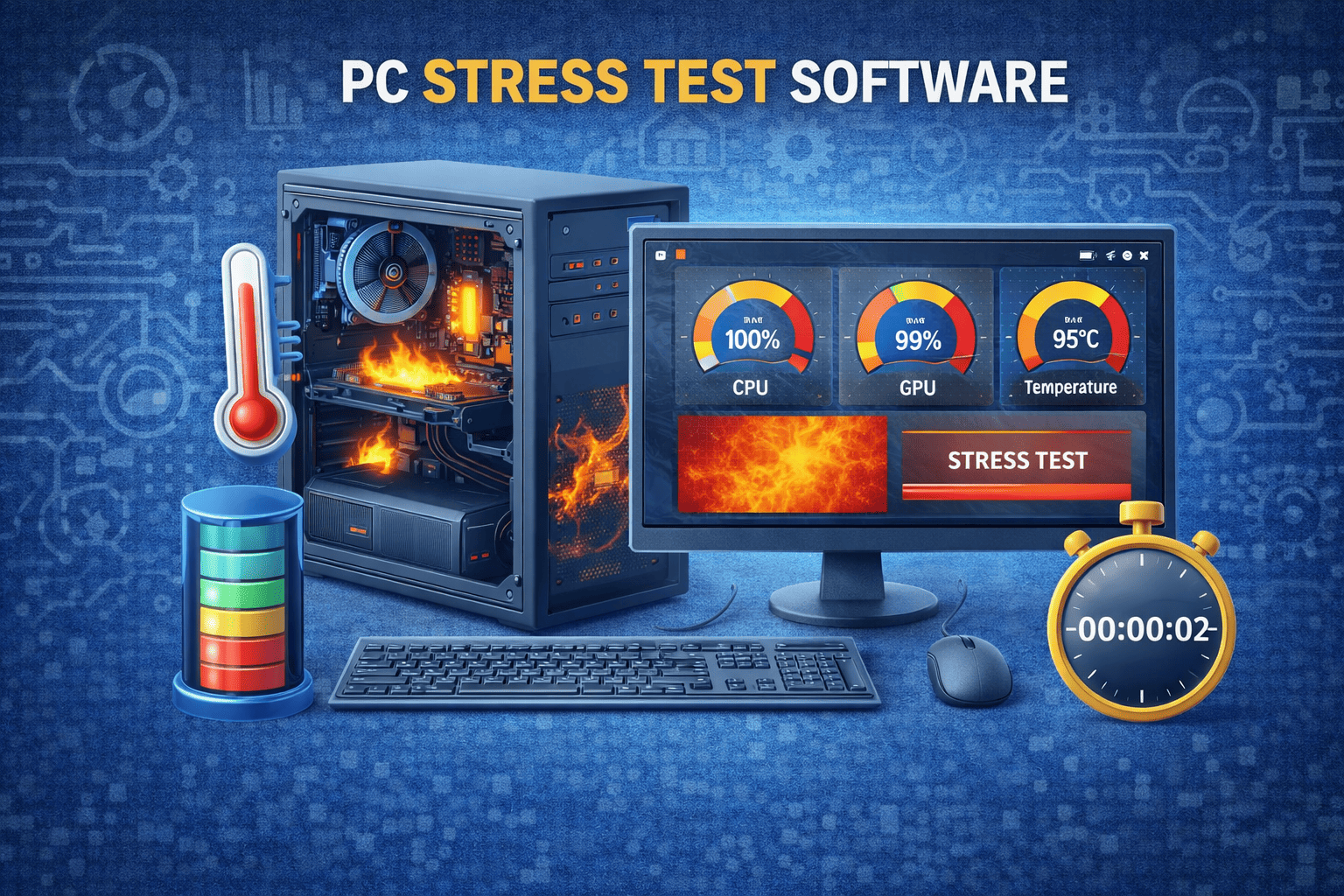
  • Best Software for Stress Testing Your PC After a Repair (2026 Complete Stability Guide)

    Best Software for Stress Testing Your PC After a Repair (2026 Complete Stability Guide)

    Look, I’ve seen this situation a thousand times in the field—someone finishes a repair, boots the system, everything looks fine… and then two days later, random crashes start showing up.

    Here is the real talk about why your rig is acting up after a repair: most hardware issues don’t fail immediately—they fail under load.

    That’s exactly why stress testing exists.

    At fixrig.xyz, this guide will break down the best software for stress testing your PC after a repair, along with a real technician-level workflow used in 2026 hardware diagnostics.


    Why Stress Testing After Repair Is Absolutely Critical

    After any hardware repair—whether it’s:

    • CPU replacement
    • GPU reinstallation
    • RAM upgrade
    • Thermal paste reapplication
    • PSU swap

    …the system is technically “working,” but not necessarily “stable.”

    Stress testing validates:

    • Thermal stability
    • Power delivery consistency
    • Memory integrity
    • GPU load handling
    • CPU boost behavior

    Without it, you’re basically guessing.


    Common Symptoms That Require Stress Testing

    If you notice any of these after repair, stop and test immediately:

    1. Random System Freezes

    Often caused by unstable RAM or VRM issues.

    2. Sudden FPS Drops in Games

    Could indicate GPU thermal throttling or driver instability.

    3. Unexpected Restarts

    Usually PSU or voltage regulation problems.

    4. BSOD Errors

    Driver conflicts or memory instability.

    5. High Idle Temperatures

    Cooling or thermal paste application issues.


    Best Software for Stress Testing Your PC After Repair (2026 Edition)

    Here are the industry-standard tools used by technicians and engineers.


    1. AIDA64 Extreme (Full System Stress Test)

    AIDA64 Extreme

    This is a complete hardware diagnostic suite.

    What it tests:

    • CPU stability
    • GPU load
    • RAM performance
    • Sensor monitoring

    Why it’s powerful:

    It stresses multiple components simultaneously, simulating real-world workloads.


    2. Prime95 (CPU Stability King)

    Prime95

    A classic tool that still dominates CPU stress testing.

    What it does:

    • Maximum CPU load
    • FPU stress
    • Heat generation testing

    Tech insight:

    If your CPU survives Prime95 for 30–60 minutes without errors, it’s highly stable.


    3. FurMark (GPU Stress Testing)

    FurMark

    A brutal GPU stress tester used for thermal validation.

    Tests:

    • GPU core stability
    • Thermal performance
    • Power delivery spikes

    Warning:

    This tool pushes GPUs beyond normal gaming loads.


    4. MemTest86 (RAM Diagnostic Tool)

    MemTest86

    One of the most trusted memory testing tools in the industry.

    What it detects:

    • Faulty RAM sticks
    • Memory timing issues
    • Corrupt memory sectors

    Pro tip:

    Run at least 2–4 full passes for accurate results.


    5. OCCT (All-in-One Stress Testing Suite)

    OCCT

    A modern tool that combines CPU, GPU, PSU, and RAM testing.

    Features:

    • Real-time monitoring
    • Power supply stress mode
    • Error logging system

    Comparison Table: Stress Testing Tools

    ToolComponentStrengthDifficulty
    AIDA64Full systemAdvanced diagnosticsMedium
    Prime95CPUExtreme load testingMedium
    FurMarkGPUThermal stress testingEasy
    MemTest86RAMDeep memory testingMedium
    OCCTAll-in-oneBalanced testing suiteEasy

    Step-by-Step Stress Testing Guide After Repair

    Step 1: Baseline Monitoring First

    Before any stress test:

    • Install monitoring tools
    • Check idle temperatures
    • Verify BIOS settings

    Look, I’ve seen people skip this step and misdiagnose perfectly fine hardware.


    Step 2: Start with CPU Stress Test

    Run Prime95 or AIDA64 CPU test:

    • Duration: 30–60 minutes
    • Monitor temperature spikes
    • Watch for throttling

    If temperatures exceed safe limits, stop immediately.


    Step 3: Test GPU Stability

    Run FurMark:

    • Monitor GPU temperature
    • Watch fan curves
    • Check for artifacts

    If you see visual glitches, that’s a hardware warning.


    Step 4: Run Memory Diagnostics

    Use MemTest86:

    • Boot from USB
    • Run multiple passes
    • Look for red error lines

    Even a single error = unstable RAM.


    Step 5: Full System Stress Test

    Now combine everything using OCCT:

    • CPU + GPU load together
    • PSU stability test
    • Watch voltage fluctuations

    This simulates real gaming and rendering workloads.


    Step 6: Long-Term Stability Check

    After initial tests:

    • Use system normally for 24–48 hours
    • Play games
    • Run productivity tasks

    If no crashes occur, system is stable.


    Root Causes Found During Stress Testing

    1. Improper Thermal Paste Application

    Common after CPU or GPU reinstallation.

    2. Loose Power Connectors

    Even slightly loose GPU cables can cause instability.

    3. BIOS Misconfiguration

    Incorrect voltage or RAM settings.

    4. Driver Conflicts

    Especially after GPU or chipset changes.

    5. Weak PSU Performance

    Voltage drops under heavy load.


    Advanced Technician Tips (2026 Standards)

    1. Always Monitor Voltage Stability

    Tools like HWInfo help track real-time voltage drops.

    2. Watch Thermal Throttling Behavior

    If CPU drops frequency under load, cooling is insufficient.

    3. Don’t Ignore Small Errors

    Even a single crash during stress test = warning sign.


    Real Talk: Why Stress Testing Saves You Money

    Skipping stress testing is like repairing a car and never test-driving it.

    Without it:

    • Hidden hardware faults remain
    • System crashes appear later
    • Data loss risk increases

    With it:

    • Stable system confirmation
    • Predictable performance
    • Long-term reliability

    Final Thoughts

    The best software for stress testing your PC after a repair isn’t just one tool—it’s a combination of CPU, GPU, RAM, and full-system diagnostics.

    If you follow this workflow:

    • AIDA64 or OCCT for system
    • Prime95 for CPU
    • FurMark for GPU
    • MemTest86 for RAM

    …you essentially replicate a professional hardware validation lab.


    CTA: Join the fixrig.xyz Hardware Lab

    At fixrig.xyz, we break down real-world hardware diagnostics like this every day.

    If your PC is still unstable after repair, drop your specs in the comments—CPU, GPU, RAM, PSU—and I’ll help you diagnose it like a field engineer.

    Because in hardware troubleshooting… testing is not optional, it’s the final repair step.