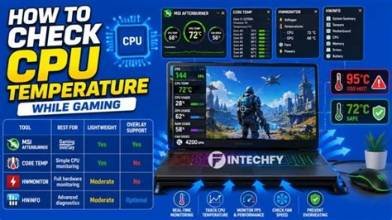
H1: How to lower CPU temperature while gaming without losing FPS and keep maximum performance under heavy load
If your gaming PC feels like a space heater during intense gameplay, you’re definitely not alone.
And look, I’ve seen this problem a thousand times—high FPS systems suddenly thermal throttling, frame pacing becoming unstable, and CPU temperatures hitting dangerous levels right when the action gets intense.
Here is the real talk about why your rig is acting up: most gaming systems are not failing because they are weak—they are overheating because cooling and power tuning are not optimized.
Let’s fix that properly like a senior IT hardware engineer working with high-performance gaming rigs in 2026.
Why CPU temperature rises during gaming
Gaming pushes CPU because:
- Real-time physics calculations
- AI enemy behavior processing
- Background game engine tasks
- Asset streaming from storage
- GPU-CPU synchronization load
Even if GPU is strong, CPU still handles critical game logic.
Common symptoms of overheating CPU while gaming
Performance symptoms
- FPS drops after 10–20 minutes
- Stuttering during fights or heavy scenes
- Input lag increase
Hardware symptoms
- CPU temperature above 85–95°C
- Fan running at max RPM constantly
- Sudden clock speed drops
Advanced 2026 symptoms
- Smart thermal throttling from BIOS AI systems
- Dynamic voltage reduction under load
- Frame pacing instability in DirectX 12 titles
Root causes of high CPU temperature in gaming
1. Poor airflow design
Low airflow cases trap heat inside.
2. Dust buildup
Even small dust layers reduce cooling efficiency.
3. Stock cooler limitations
Default coolers struggle with modern CPUs.
4. High voltage settings
BIOS auto-voltage often pushes unnecessary heat.
5. Background processes
Apps consuming CPU in background increase load.
Tools checklist for CPU cooling optimization
Before tuning system:
- Thermal paste (high-quality)
- Air or liquid cooling system
- BIOS access
- Monitoring software (HWInfo, MSI Afterburner)
- Compressed air for cleaning
- Fan control software
💡 Tech Mentor Tip: I’ve seen gamers upgrade GPU thinking FPS issues are GPU-related, while actual problem was CPU overheating due to dried thermal paste.
Comparison: stock cooling vs optimized cooling setup
| Feature | Stock Setup | Optimized Setup |
|---|---|---|
| Temperature | High (85–95°C) | Controlled (60–75°C) |
| FPS stability | Drops over time | Stable |
| Noise level | Loud | Balanced |
| Lifespan | Reduced | Extended |
| Throttling | Frequent | Minimal |
Step-by-step guide: How to lower CPU temperature while gaming without losing FPS
Now let’s go step-by-step like a professional hardware tuning engineer.
Step 1: Clean your system properly
Open case and:
- Remove dust from fans
- Clean CPU heatsink
- Clean air vents
💡 Tech Mentor Tip: Look, I’ve seen this error a thousand times—people blame CPU overheating but their heatsink is literally clogged like a filter.
Step 2: Replace thermal paste
Old thermal paste dries out and reduces heat transfer.
Steps:
- Remove CPU cooler
- Clean old paste
- Apply new thin layer
- Reinstall cooler
This alone can drop 5–15°C instantly.
Step 3: Optimize airflow inside case
Ensure:
- Front intake fans working
- Rear exhaust fan active
- Proper cable management
Airflow direction matters more than fan quantity.
Step 4: Adjust BIOS power settings
Enter BIOS and:
- Disable unnecessary CPU overvoltage
- Enable Eco or Balanced performance mode
- Adjust fan curves
BIOS controls voltage → voltage controls heat.
Step 5: Undervolt CPU (advanced but safe if done correctly)
Undervolting reduces heat without reducing FPS significantly.
- Reduce CPU voltage slightly
- Test stability
- Monitor temperatures
💡 Tech Mentor Tip: A small undervolt can reduce temps by 10°C without noticeable FPS loss in most games.
Step 6: Cap FPS intelligently
Instead of unlimited FPS:
- Set FPS cap slightly above monitor refresh rate
- Example: 144Hz monitor → cap at 150 FPS
This reduces unnecessary CPU load.
Step 7: Optimize Windows background processes
In Windows:
- Disable startup apps
- Close unnecessary background software
- Turn off overlays (Discord, Xbox Game Bar if not needed)
Step 8: Upgrade cooling system (if needed)
If stock cooling is insufficient:
- Upgrade air cooler (tower cooler)
- Or switch to AIO liquid cooling
Modern CPUs require stronger cooling under gaming loads.
Real Tech Mentor insight
Here is the truth most gamers don’t realize: high CPU temperature is not always a hardware failure—it’s often a configuration imbalance.
And yes, I’ve seen users replace CPUs thinking they are “overheating units” when the real issue was just poor airflow and default BIOS voltage settings.
Modern 2026 CPUs are powerful—but they are also sensitive to heat and voltage tuning.
Common mistakes gamers make
- Running unlimited FPS in all games
- Ignoring dust buildup
- Using default BIOS settings
- Overvolting CPU unnecessarily
- Not monitoring temperature during gameplay
Even small mistakes can increase CPU temperature by 10–20°C.
When cooling upgrades are required
You should upgrade cooling if:
- CPU consistently exceeds 90°C
- Thermal throttling happens frequently
- Stock cooler is used on high-end CPU
- Case airflow is extremely limited
At that point, hardware upgrade becomes necessary.
Prevention tips for long-term thermal stability
- Clean PC every 2–3 months
- Replace thermal paste every 1–2 years
- Maintain proper airflow design
- Monitor CPU temps regularly
- Avoid unnecessary background apps during gaming
Final CTA: Keep FPS high and temperatures low
If your CPU is overheating while gaming, don’t assume your system is broken.
Now you know exactly how to lower CPU temperature while gaming without losing FPS using smart cooling strategies, BIOS tuning, undervolting, and system optimization techniques.
For more deep gaming optimization guides, hardware repair tutorials, and performance tuning strategies, visit fixrig.xyz—your ultimate hub for hardware enthusiasts and gaming system builders.
Got a heating issue in your gaming PC? Drop your specs in the comments or ask the fixrig.xyz community. Someone has already optimized your exact gaming setup before.
Because in modern gaming, winning is not just about FPS—it’s about thermal control and system balance.
Leave a Reply